

| Hi! In the last two blogs, we discussed how anxiety can be experienced as panic (physiological symptoms), as worry thoughts (cognitive symptoms), and finally as avoidance or behavioural problems (behavioural symptoms). This week, I’ll share some strategies for behavioural symptoms. In DBT (Dialectical Behavioural Therapy), it is called “Opposite Action.” In CBT, it is known as “Exposure Therapy.” In simple English, it means doing the thing one is afraid of doing. For example, if one is afraid of flying, get on an air plane. If one is afraid of visiting a friend, go visit the friend. (Much easier said than done, right??!! Why is that so important? Two things are often discovered. 1. Whatever I was afraid of didn’t actually happen, and over time, the anxiety decreased by itself. 2. Even if the anxiety didn’t go down, I was able to endure the anxiety. Many children do not respond well when we simply throw them into the “exposure” situation. Therefore, we create a brave ladder to help build the bravery and courage to master the fears and discomforts. Below is a brave ladder for a 9-year-old that was created at the start of therapy. 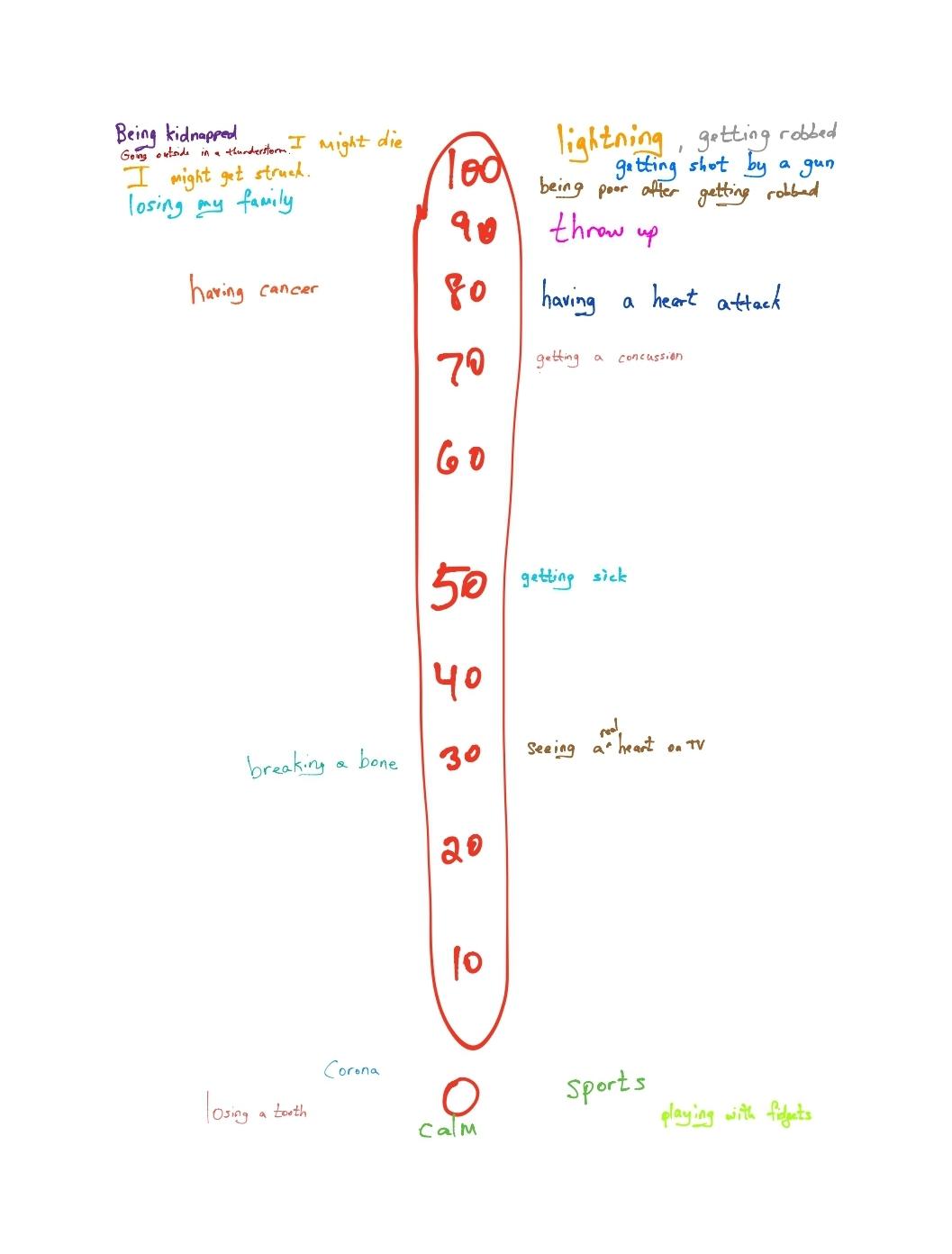 Exactly one year later… 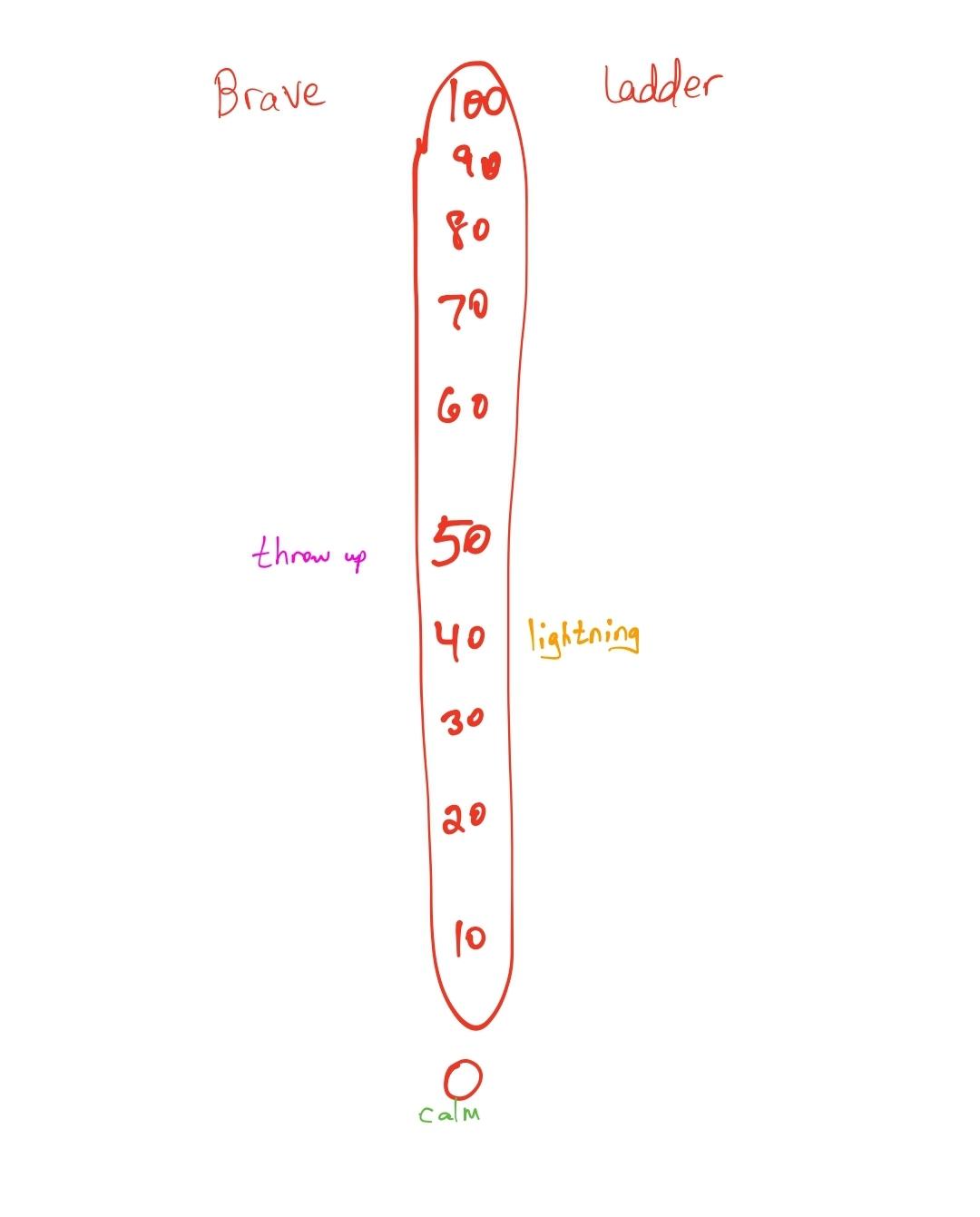 Most anxieties were gone, albeit some remained. Since the leftover anxieties didn’t disrupt the child’s life anymore, the child “graduated” and no longer needed help with his anxieties. Below is the “Graduated” list 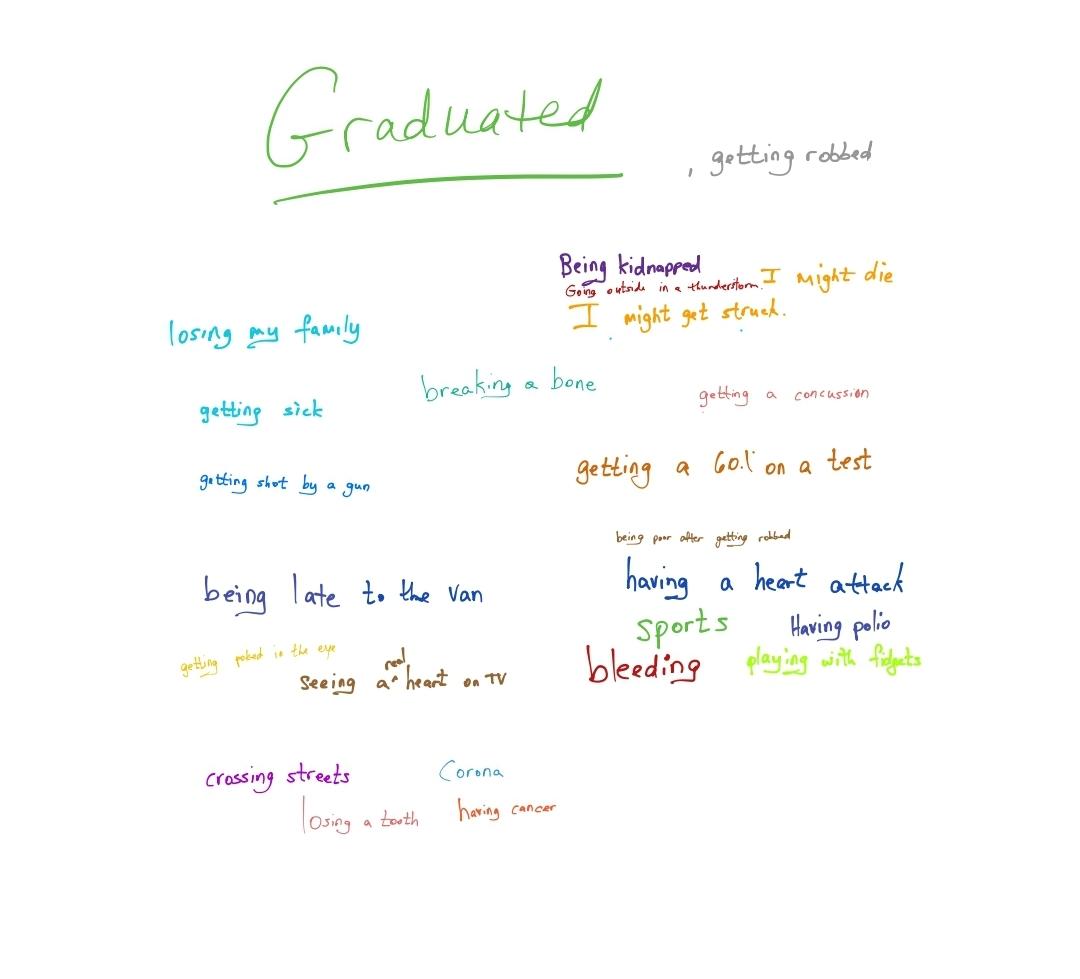 Clearly, it wasn’t magical work. It took a whole year during which time different anxieties slowly moved to the “graduated” list.  P.S. Oftentimes, when you teach strategies for some of the anxieties, other anxieties will disappear on their own, which is what happened with the 9-year-old above. Have a productive week! Dr. Devora |
