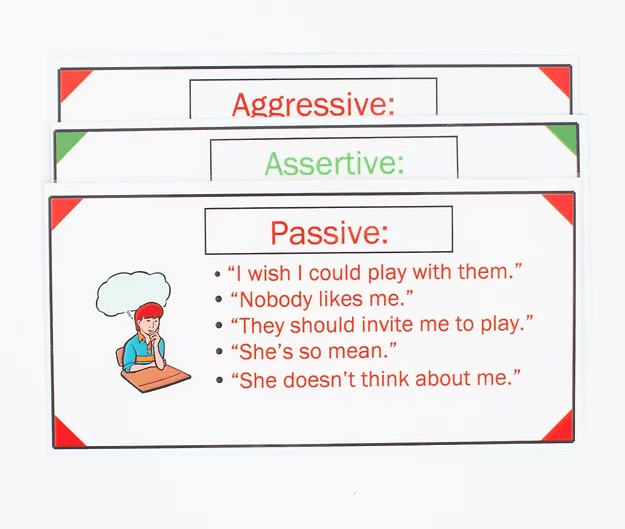
When negative patterns persist…
Ah, that magical middle ground, where children speak up for themselves confidently and respectfully. No knocked-the-other-kid-over-cuz-he-was-in-my-seat aggressiveness. No shrug-of-shoulders suppressed feelings (and subsequent explosions). Sounds so peaceful. But how to get there, when your child or student keeps defaulting to the same patterns?Re-route to smoother pathways
This evidence-based but simple-to-use set of posters come with distinct illustrations that teach so many things: How to regulate their emotions and express them properly. How to deal with anger without exploding. How to deal with conflict effectively. How to handle disappointment and when to speak up about it. Above all, this social skills activity teaches kids how to have a conversation in a way that respects themselves and others.Good communication is important everywhere!
- In the classroom – regular and special ed teachers will find the set useful for teaching social emotional skills, conflict resolution skills, and classroom communication
- In the therapy room – perfect for behavior therapists and psychologists addressing relationship and social communication difficulties AND speech-language pathologists targeting pragmatic language and tone of voice
- At home – keeping this poster set handy will help foster balanced communication in everyday encounters with family members
With this visual SEL poster/ activity showing passive, assertive, and aggressive approaches, children learn to recognize their current patterns and choose healthier ways to express their needs.• Passive Communication Poster - Visual examples of withdrawn, indirect communication patterns to recognize
• Assertive Communication Poster - Clear illustrations of confident, respectful ways to express needs and boundaries
• Aggressive Communication Poster - Examples of demanding, overwhelming communication styles to avoid
• Detailed Instruction Sheet - Professional guidance for therapeutic implementation across all settings
• Age-Adaptable Content - Successfully used with individuals ages 5-16 needing communication skill building